


A statewide series of concerts, exhibits and educational programs
WHAT IS VIOLINS OF HOPE
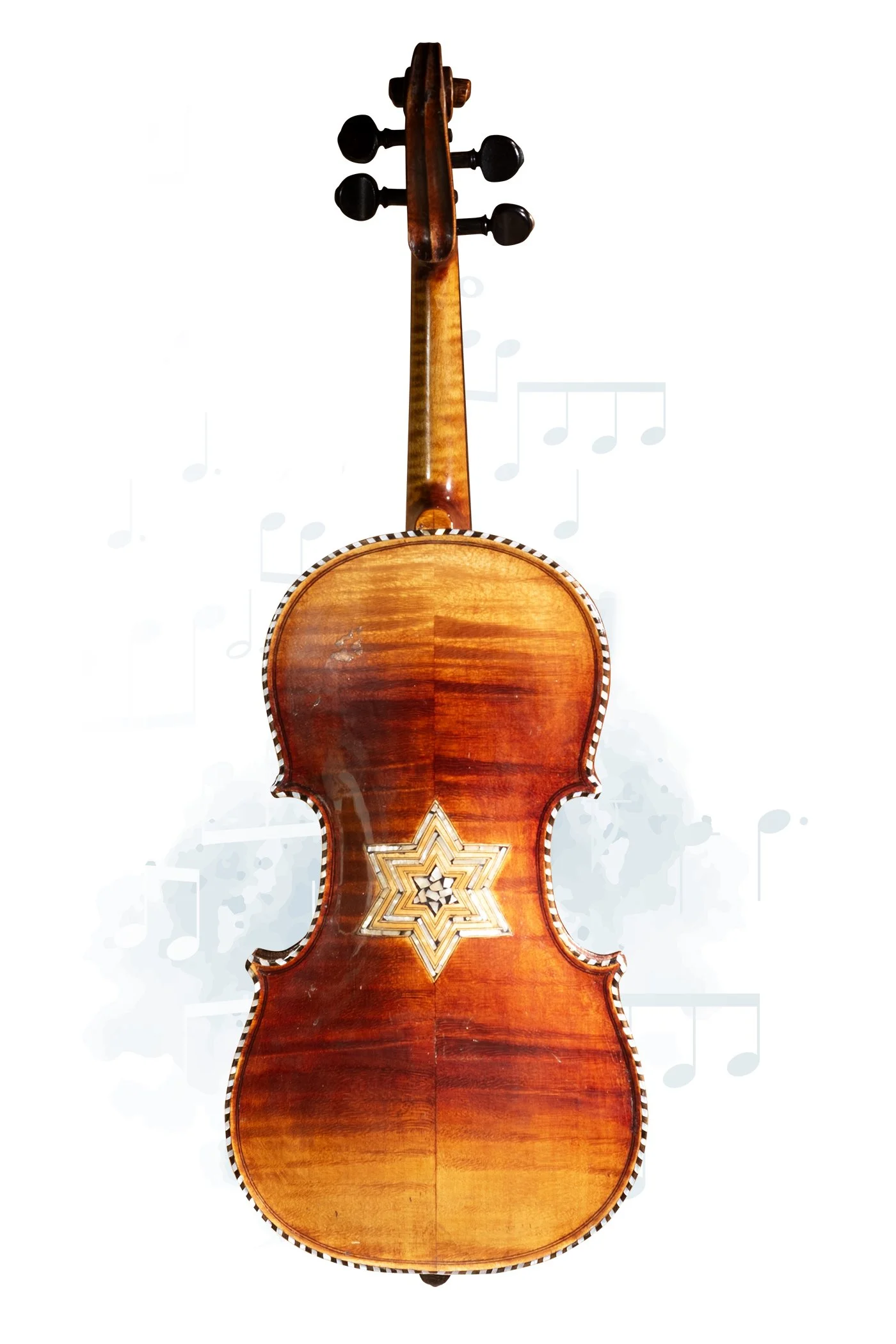
Violins of Hope is a global project built around a private collection of 70 violins, viola and cello connected to Jewish musicians before and during the Holocaust.
Played in concerts and showcased in exhibits and educational programs worldwide, the instruments allow music to carry forward stories of resilience and remembrance for today.
These instruments were collected and lovingly restored by Israeli violin maker Amnon Weinstein. His son, Avshalom Weinstein, continues the work, restoring instruments and bringing Violins of Hope to audiences around the world.
The first Violins of Hope concert was performed in 2008 in Jerusalem. The violins have traveled to and been played in major cities in Spain, France, Italy, Germany, Mexico, England, Romania, Poland and the United States. It is a great honor to have musicians performing with these instruments in Iowa.
THE COLLECTION’S ORIGIN
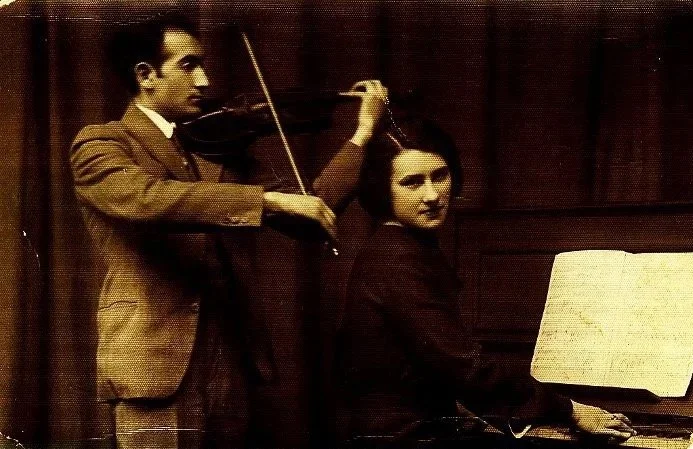
This is the Weinstein’s connection to violins and to others who suffered great losses. The late Amnon Weinstein and his son Avshi carry on the family’s tradition as luthiers and storytellers keeping hope alive through these violins.
In 1991, Amnon presented a lecture to the German Violin and Bow Making Association about how the instruments arrived in Israel. Amnon then spoke on a radio show and asked if anybody had an instrument that belonged to Jewish people who survived or died in the war. The next day a man called who had his uncle’s violin.
Amnon arranged for the collection of violins to be played in concert and more instruments came into their collection that includes over 100 items.
The stories of those who played the instruments are told through the Violins of Hope project to make sure people never forget.
Amnon’s father, Moshe Weinstein, was a musician and violin maker who immigrated to Palestine in 1938. While he survived, the rest of his family, about 400 members, were among the six million Jews and 76 million people who died during the Holocaust.
After World War II, Moshe was head of the Vilna Association and welcomed surviving immigrants on their first day in Isreal. Beautifully made German instruments were left untouched after the war as nobody wanted to play a German-made violin. Musicians came to Moshe’s shop and said, “You are either going to buy this instrument from me or I will break it or burn it.” He didn’t want the instruments destroyed so he bought what he could knowing that he could not sell them again because nobody wanted to buy anything German. The instruments stayed as a collection in the violin maker’s workshop for many years.

“My job is to preserve, for future generations, the most moving thing that the previous generations have passed on to us. These instruments carry all the emotions, the strength, and the sadness of a human life.”
Amnon Weinstein

LESSONS FOR TODAY
Through music, Violins of Hope Iowa invites audiences to remember the past, engage the present and carry forward a message of hope through education and shared experience. The residency is made possible through collaboration with arts, education and community organizations across the state.